
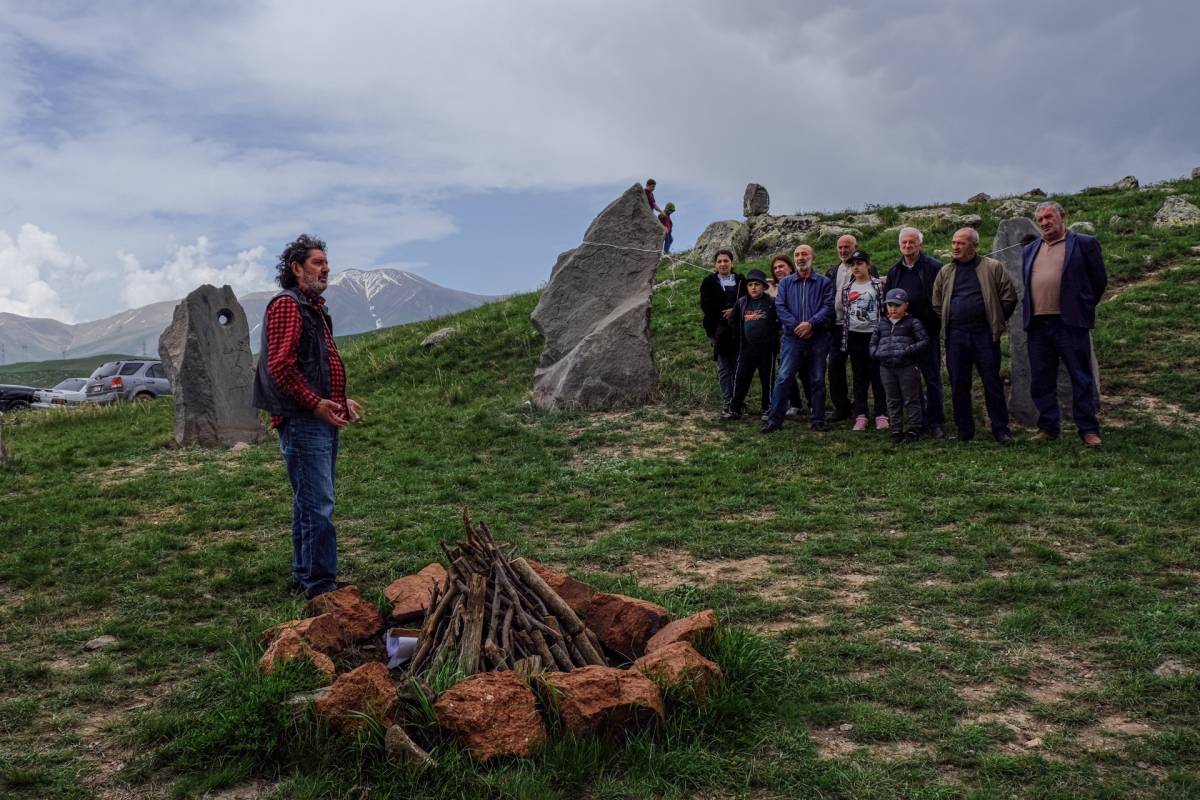
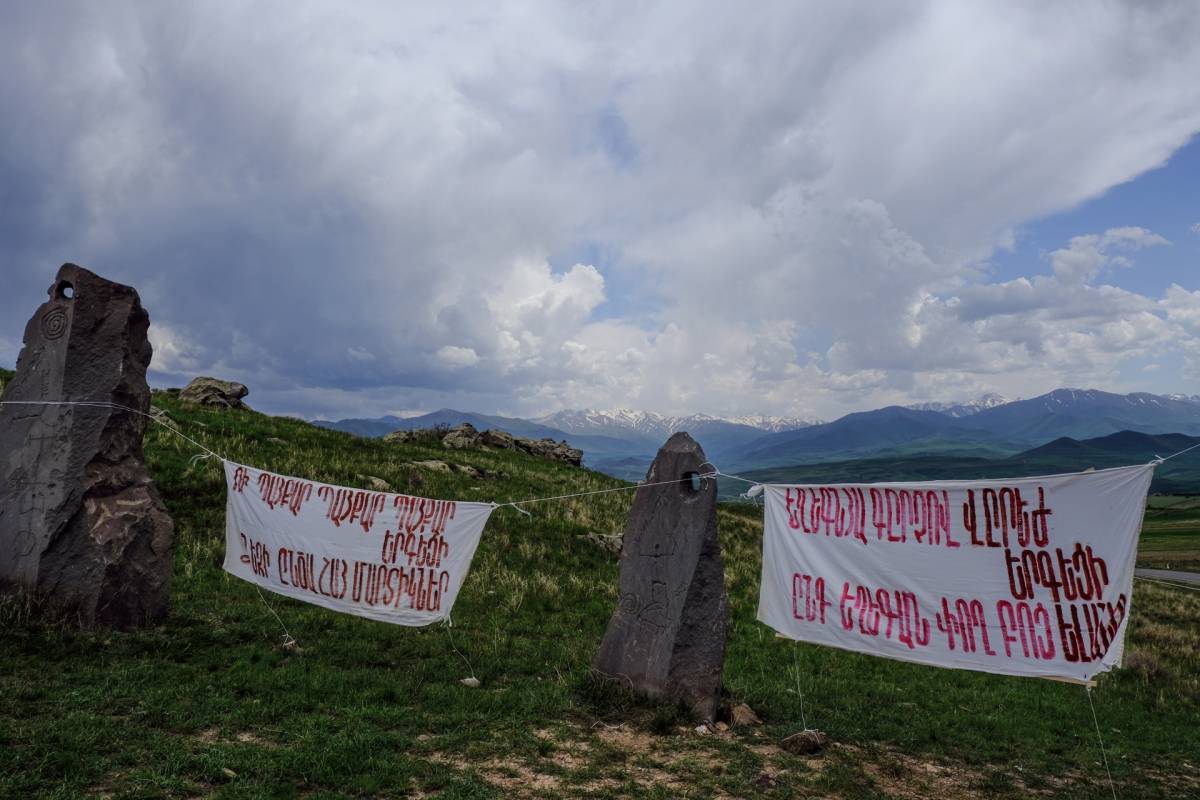
Returning from the war, depressed, as he empties his water bottle, artist Ashot Avagyan notices that there is some water left in it. He has filled it in Hadrut. The water is here, but the city has fallen. He currently can’t fill his bottle there. He can do that again if revanche is successful. But first, one needs to live and create by keeping the revanche sentiment alive, something that Avagyan is doing with the water he has kept from the war. “There will be revanche” – calls artist Ashot Avagyan’s commander, Ashot Minassyan, and people gathered between the two prehestoric stones of Carahunj disperse.
As people of different genders and ages (children, youth, adults) move around, a white canvas, attached to the prehistoric stones, appears, with the inscription “There will be revanche.” Their bodies were covering the writing and when they stepped away together, the concept of revanche was revealed. This symbolizes the participants’ support for the call.
The artist had preserved the water for at least 567 days and used it on May 29, 2022, in Sisian, near Zorats Karer/Carahunj, during a ritualistic art performance. The artist fills the water from the fallen city in his hands, then applies it to the arms of the participants. Thus the water unites the people who want to bring back their homeland, the people who join the artist’s call.
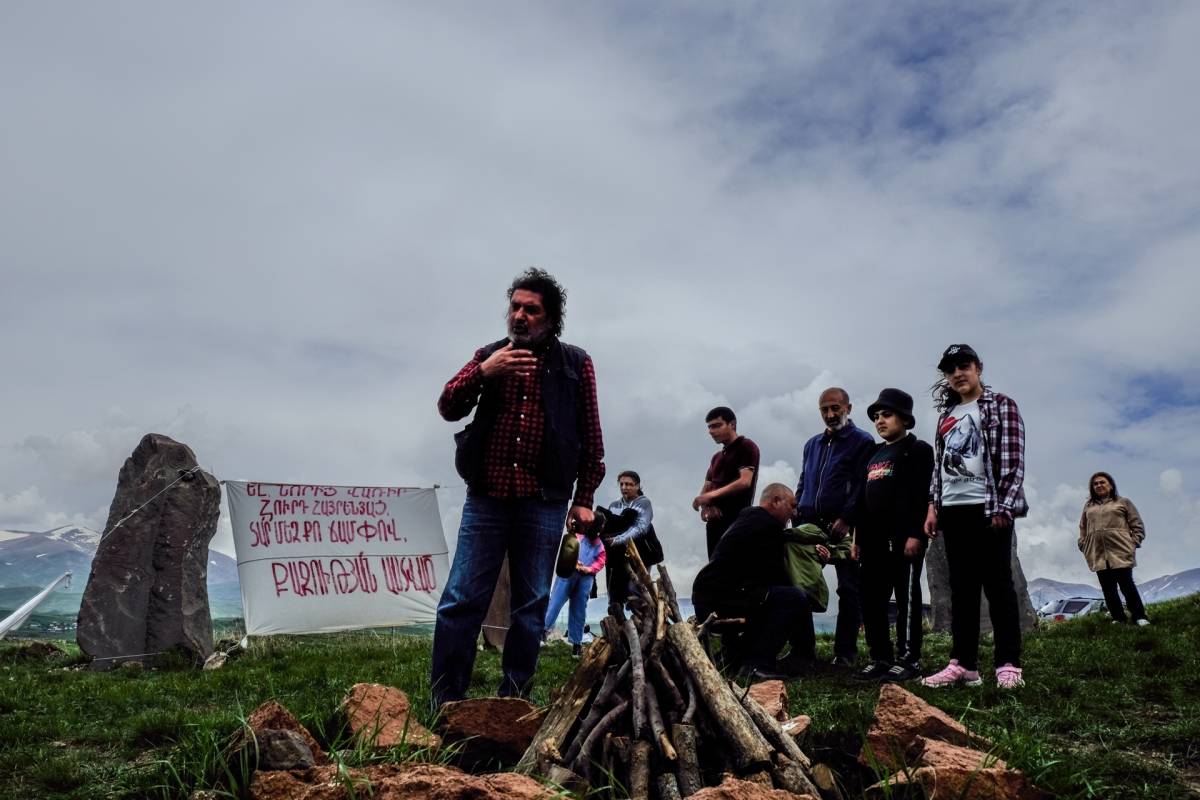
Water is hard to access in war, it is used sparingly on the battlefield, the use of each drop is calculated. The same is not true away from the battlefield, where you can enjoy water drops as much as you wish, without worrying about getting shot while drinking water, while interacting with water. Interacting with the war-water creates a purpose and message and the message is given a name by someone who is a soldier during war, and an artist between wars. The water in the bottle is meant to be drunk. During war, the purpose of quenching one’s thirst is the security of the land. The soldier is recharged with water and fights for the protection of the homeland.
After the war, water still serves the protection of the homeland, not to quench one’s thirst, but to appease the mind. During war, the use of water is dictated by the present, meaning you drink it and quench your thirst. During the period between wars, it is dictated by the future, meaning, you apply it to your hands and wait for revanche. The artist is recharged and recharges others using water, pursuing the security of the homeland in the future. Around him are mountains, witnesses to thousands of battles and rituals, the habitat of artists and soldiers. Below the mountains lies the asphalt road where cars go by. Thus, the territory merges the past and the present, where the artist is the ritual leader, the fusion of the old and new performers.
The artist is performing in Syunik, a region that is part of Turkey’s expansionist dreams. Nearby, on Ishkhanasar, Azeri Turks have been stationed waiting for the right time to seize Syunik. The performance is against their expansionist dreams, and in solidarity with the aspirations of Armenians and their security. They (the Azeri Turks) will leave the Armenian mountains and those living at their feet will live in peace if the sentiment of revanche is kept alive.
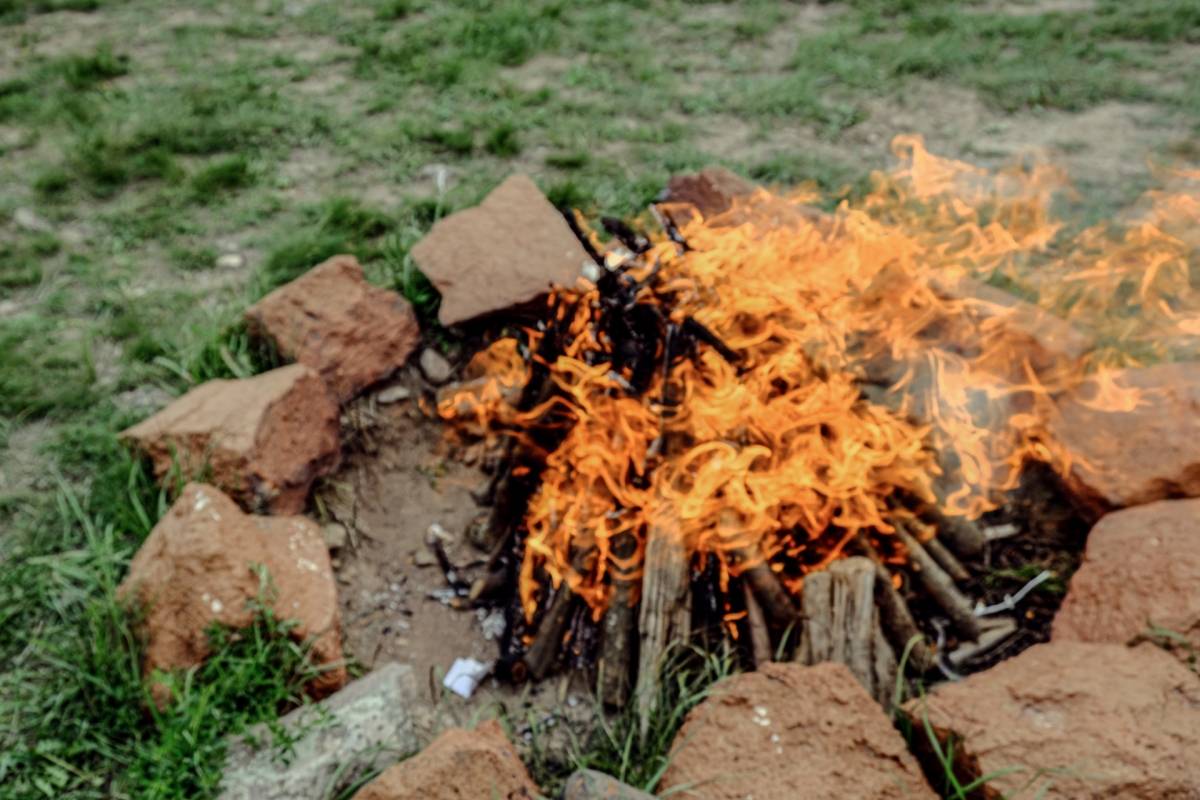
To focus on aspirations, one needs to come out of depression. Depression is the negative emotion caused by past events. To get rid of it, the artist uses fire. He advises the people who have interacted with his water to write their memories down on paper and hand them over to the fire. The fire recycles the negative past and rebuilds the positive future. The artist is the psychotherapist after the war and before the war. The artist’s commander lights the bonfire.
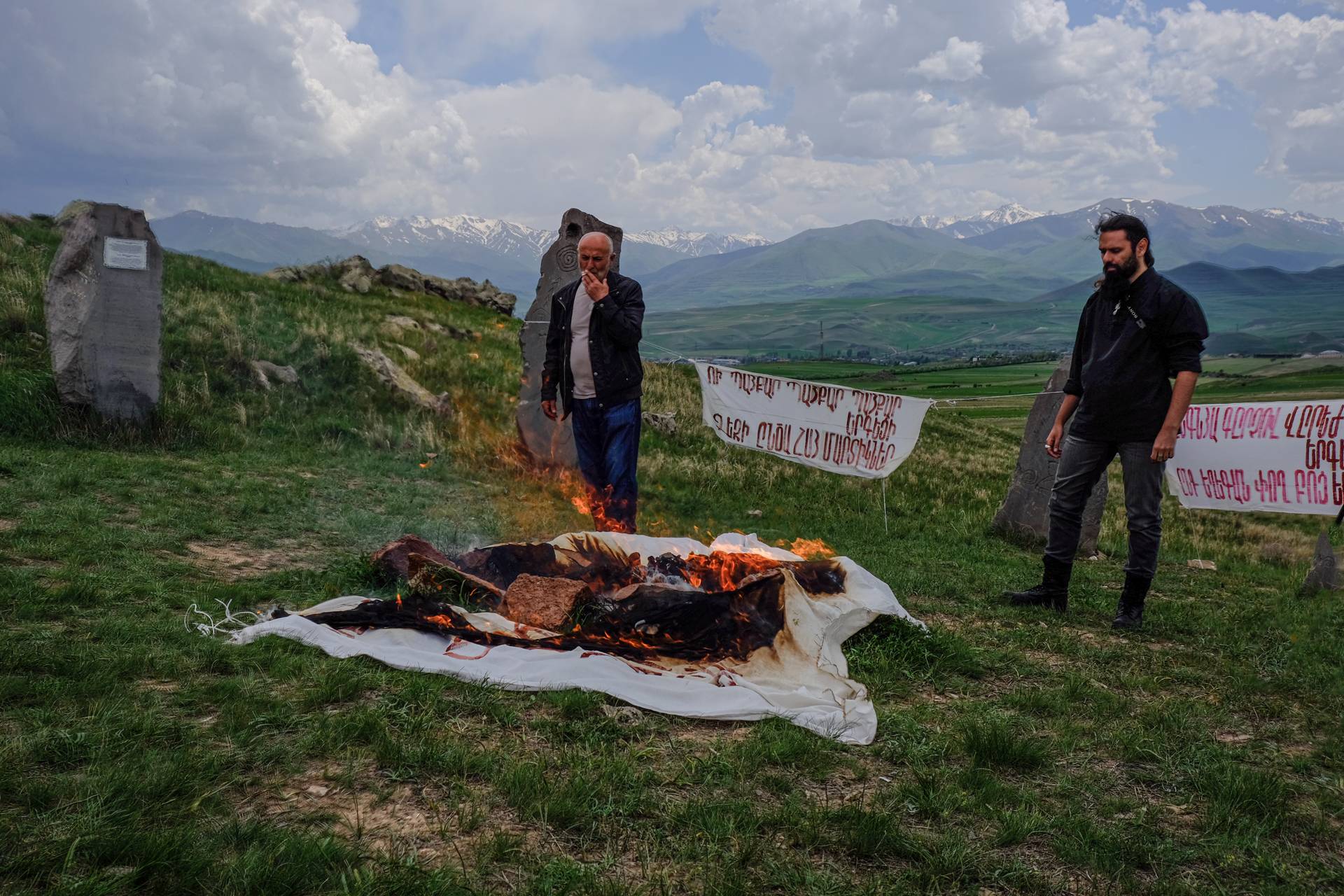
The artist’s commander, Ashot Minasyan (Ashot Yergat), the commander of the Sisian division, actively participates in the performance. In war, the commander leads the artist, while between wars, the artist leads the commander. On the battlefield, the artist helps the commander, while away from the battlefield and before a new battle, the commander helps the artist by channeling resolve to the collective goal. Only in the case of revanche and its success can the Armenian artist return to other parts of his land to perform and protect the work of his colleagues.
The word revanche is French. Revanchists were the French who wished to take back the lands they lost in 1870 to Prussia (or Germany). Azeri Turks, in order to put a halt to Armenian dreams, call Armenians revanchists, thus giving a negative connotation to the protection of the Armenian homeland, to Armenian dreams. The word enters Armenian society through Turkey’s spokespeople, agents and media, and Armenian speakers living in Armenia also call Armenia’s dreamers revanchists in a derogatory way.
This limits the scope of artists, they hesitate to perform in support of the protection of the homeland. Artist Ashot Avagyan calls himself a revanchist thus removing the negative connotation of the word. He transfers it to the children, the youth, the adults and transforms it into a ritual. He encourages them not to be embarrassed by revanche, on the contrary, to be proud of it, to aspire to it. The Sisian division took part in the liberation of Karvadjar in 1993. Therefore, both Ashots, artist and commander, have achieved their aspirations, they are doers.
The performance “There will be revanche” transmits the conviction of the doers to the dreamers. Revanche is the possibility of once again filling your water bottle in Hadrut, to drink water to your heart’s content in Hadrut.
Hovhannes Ishkhanyan
Translated by Alik Meguerditchian
Photos by Alison Tahmizian